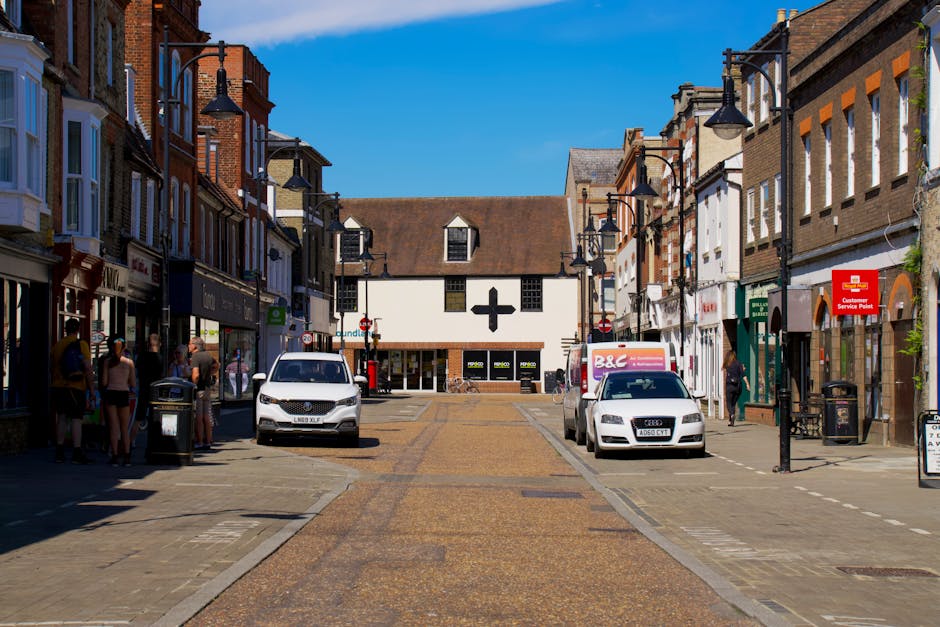
High Street Addington parking tips for man with van moves
If you are planning a move on or near High Street Addington, parking can make the difference between a calm job and a slightly chaotic one. The van might be ready, the boxes might be labelled, but if you cannot stop safely and legally close to the property, everything slows down. These High Street Addington parking tips for man with van moves will help you plan access, avoid awkward delays, and keep the move as smooth as possible.
Truth be told, parking is often the bit people forget until the van is already circling the street. That is when stress kicks in, the clock starts ticking, and every extra metre matters. In this guide, you will get practical advice on where to stop, how to load quickly, what to check before arrival, and how to reduce risk for everyone involved. If you are comparing options for a move, you may also find it useful to look at our man with van service, man and van support, or the wider removal services available.
Quick takeaway: the best parking plan is the one that gives the van a safe, legal stopping point, a clear walking route, and enough room to load without blocking the road or rushing the job.
Table of Contents
- Why parking matters on High Street Addington
- How parking for a man with van move works
- Key benefits and practical advantages
- Who this is for and when it makes sense
- Step-by-step guidance
- Expert tips for better results
- Common mistakes to avoid
- Tools, resources and recommendations
- Law, compliance, standards, and best practice
- Options, methods, or comparison table
- Case study or real-world example
- Practical checklist
- Conclusion
- Frequently asked questions
Why High Street Addington parking tips for man with van moves Matters
Parking is not just a convenience issue. For a man with a van move, it affects timing, safety, customer satisfaction, and sometimes the overall cost of the job. On a busy high street, the wrong parking choice can mean double-handling furniture, longer loading times, or a van being left awkwardly far from the door. That sounds minor until you are carrying a wardrobe down a narrow path in light rain. Not ideal.
High streets also tend to have a mix of parking restrictions, loading limitations, delivery activity, pedestrians, and passing traffic. Even where the road looks quiet at first glance, the picture can change quickly. A parking space that seems convenient may be too tight for a van with rear doors opening, or too far from the entrance to keep the move efficient. If you are dealing with a household move, the benefits are even clearer. Good parking saves energy, protects items, and helps the whole day feel more under control. You can see how this fits into broader moving support such as home moves and house removals.
There is also a trust element here. When a mover arrives with a sensible parking plan, it reassures the customer that the job is being handled professionally. That matters more than people often admit. A tidy, considered start usually leads to a tidier, more considered finish.
How High Street Addington parking tips for man with van moves Works
The basic idea is simple: before the van arrives, think through where it can stop, how long it can remain there, and how the loading will happen. In practice, though, there are a few moving parts. You need to balance road rules, property access, the van size, and the physical route between vehicle and doorway.
1. Check the street layout before the move
Start by picturing the street in practical terms. Is there a kerbside bay, a lay-by, a loading area, or only standard on-street parking? Is the property close to a junction? Are there school drop-off times, busier commuter windows, or regular foot traffic? Even if you do not know every local restriction, a quick look ahead can reveal whether the van can stop without causing a problem.
2. Match the parking spot to the job
A small flat move with a few boxes has a different parking need from a full house move or office relocation. If the van only needs to be open for a short lift, a nearby legal bay may be enough. If the job involves sofas, beds, or multiple trips, you want the closest practical stop possible. For larger or heavier moves, many customers look at dedicated moving van or removal van options because the vehicle size and access planning become more important.
3. Leave room for loading safely
The van should not be parked so tightly that doors cannot open fully or movers have to twist awkwardly with bulky items. Rear access matters, especially when handling furniture. Side access can help too, but only if the road space allows it. A spot that saves thirty seconds but creates a scramble is usually the wrong spot. Simple as that.
4. Keep the path between van and property clear
The best parking spot is not necessarily the closest one on paper. It is the one with the cleanest route. Think about lamp posts, bins, uneven paving, parked cars, low branches, steps, and door thresholds. A clear route can make a move feel almost effortless. Almost.
5. Build in a little timing buffer
Parking is one of those things that can look fine right up until you arrive and find another vehicle in the spot. That is why a small buffer helps. If the plan only works when the exact bay is free at the exact minute, it is a fragile plan. A bit of flexibility goes a long way.
Key Benefits and Practical Advantages
Good parking planning has benefits that go well beyond convenience. It improves the quality of the whole move, and you can usually feel the difference within the first ten minutes.
- Faster loading and unloading: less walking means fewer trips and less wasted time.
- Lower risk of damage: shorter carrying distances reduce the chance of dropping items or scuffing walls.
- Less fatigue: movers and customers do not have to keep marching back and forth.
- Better traffic flow: a sensible stop keeps the street safer for pedestrians and drivers.
- More predictable scheduling: the move stays closer to plan, especially where multiple collections or drop-offs are involved.
- Cleaner customer experience: people remember when a move starts calmly instead of with a flurry of apologetic shuffling.
For business moves, these benefits can be even more noticeable. Office equipment, filing, display stock, and boxed documents all benefit from proper access planning. If you are organising a commercial move, our commercial moves and office removals pages are useful starting points for understanding how a smoother load-in and load-out works in practice.
And yes, parking can also influence cost. Not in a dramatic way every time, but a move that requires extra carrying, waiting, or repeated repositioning may take longer. Time is still time.
Who This Is For and When It Makes Sense
These parking tips are useful for anyone booking or arranging a man with van service around High Street Addington, but they are especially relevant in a few situations.
Home movers with larger items
If you are moving beds, wardrobes, a sofa, or white goods, you need a parking setup that keeps the lifting manageable. The less distance between the front door and the van, the better. That may sound obvious, but people often underestimate how tiring one extra flight of steps or a longer walk can be.
Tenants with tight move-out windows
When you need to hand back keys by a certain time, parking delays become a big deal. You do not want the last box still in the hallway because the van had to park two streets away. A good plan matters more when the clock is unforgiving.
Small businesses and office teams
Retail stock, archive boxes, and work equipment often need quick, orderly transfer. Office parking also needs a bit more forethought because staff, customers, and deliveries may all be using the same stretch of road. For that kind of job, a service like office relocation services can be a better fit than trying to improvise on the day.
People collecting or delivering a single item
Even a furniture collection can go sideways if there is nowhere sensible for the van to stop. A narrow street or a busy high street can still create friction for a small job. If the item is large or awkward, parking becomes part of the handling plan. That is just the reality of it.
Anyone hiring a man and van for the first time
If this is your first time using a man and van service, do not worry. You are not expected to know everything in advance. But it helps to think through access, loading space, and timing before the van arrives. A little prep avoids a lot of back-and-forth on the day.
Step-by-Step Guidance
Here is a practical way to plan parking for a High Street Addington move without overcomplicating things.
- Walk the route first if possible. Look at the nearest legal stopping points, the distance to the property, and any obvious obstructions.
- Estimate the size and shape of the load. Boxes are one thing; a wardrobe or mattress is another. The bigger the item, the more important parking becomes.
- Decide whether the van needs one position or two. Some streets allow a short loading stop, then a shift to a longer stay location nearby. That can work well if organised properly.
- Check the timing of the move. School runs, lunch hours, and evening traffic can turn a quiet street into a fiddly one. Mid-morning is often easier than peak times, though every street has its own rhythm.
- Clear space at the property. If bins, planters, bikes, or loose items block the doorway, your best parking spot will still feel awkward.
- Let the mover know about access quirks early. Gate codes, basement access, shared drives, height limits, and narrow turns all affect where the van should go.
- Keep a backup plan. If the first parking spot is taken, identify a second option that is still workable and legal.
- Use a loading order. Start with the items that are most awkward to carry or fit. That keeps the van space efficient and reduces rushed re-packing later.
A small example helps. If you are moving from a first-floor flat off the high street, the ideal plan may be to stop in the nearest legal bay, bring down the larger furniture first, and then finish with boxed items. That way the van is not constantly being moved or double-parked while you are still sorting the corridor. Simple, efficient, less stress.
Expert Tips for Better Results
These are the little details that tend to make the biggest difference.
Choose the side of the road that reduces crossing
If there is a safe and legal option on the same side as the property entrance, take it. Cutting down on road crossings makes everything smoother, especially if you are carrying long or bulky items. It also helps avoid awkward pauses where one person is waiting in the road while the other is trying to open the van.
Plan for rear-door access first
Many people focus only on how close the van is to the house, but forget whether the rear doors can open fully. That can be a mistake. A van parked too close to a wall, post, or another vehicle can be almost useless for loading. It looks tidy, but it behaves badly.
Keep cash-free, clutter-free move spaces
Loose change, keys, paperwork, and snacks tend to disappear at the wrong moment. Keep the essentials in one pouch or small bag. I know that sounds mildly over-organised, but on moving day it saves time. And where did the tape go? Somebody always asks that.
Use a spotter if the road is busy
When a street is tight, one person watching for cars and pedestrians can make the manoeuvre much safer. This is especially useful if visibility is poor or the van needs to reverse into position. A quick signal system beats shouted instructions across traffic every time.
Keep a short loading window realistic
If you think everything will be on the van in ten minutes, you are probably underestimating the job. Build in breathing room. A realistic timeline gives you better parking decisions because you are not trying to force the van into a spot that only works if the entire move is miraculous.
Take photos of the vehicle position if needed
If there is any question about where the van stopped, a quick photo can help you remember the setup later. This is more of a practical habit than a formal rule, but it can be useful for repeat visits or multi-stop jobs.
Common Mistakes to Avoid
Parking problems are often created by small assumptions. Here are the ones we see most often.
- Assuming the first free space is the right space. It may be free for a reason.
- Ignoring loading restrictions. A bay that allows parking may still not be suitable for loading at the time you need it.
- Blocking driveways or crossings. This creates avoidable conflict and can derail the whole move.
- Forgetting the van's turning circle. A van needs a bit more room than a car, especially when reversing or pulling out.
- Leaving fragile items for the last trip. If parking becomes difficult, the last trip is often the most rushed one.
- Not telling the mover about road access. If there is a width issue, low-hanging branch, height barrier, or steep approach, say so early.
- Assuming the move will be quick enough to risk a questionable stop. That one has a habit of backfiring. Usually at the worst moment.
One practical point: if the street looks congested, do not assume a "small stop for just a minute" is harmless. A minute can become five. Then ten. Then you are in the middle of a situation you would rather not explain to a neighbour. Better to plan properly from the start.
Tools, Resources and Recommendations
You do not need fancy equipment to organise parking well. A few simple items and habits make a big difference.
- Measuring tape: useful for checking whether furniture can fit through doors and into the van without long detours.
- Hi-vis vest or bright clothing: handy when guiding the van in a busier street, especially at dusk or in poor weather.
- Door wedges and blankets: help keep routes safe and reduce knocks during repeated trips.
- Phone battery pack: because the moment your battery drops is usually the moment you need a quick call.
- Labels and room markers: keep boxes moving in the right order so the loading area does not turn into a jumble.
For service planning and trust signals, it is also worth reviewing a mover's operational pages before you book. Our pricing and quotes page is helpful if you want to understand how the job is priced, while insurance and safety explains the kind of care you should expect on moving day. If you want a bit more background on the company itself, the about us page can give you a sense of who is behind the service.
If you are handling items you no longer need, you may also want to think about reuse and waste reduction. A collection like furniture pick up can be a practical way to clear space before the move. Not glamorous, but very useful.
Law, Compliance, Standards, or Best Practice
Parking on a high street is not just a convenience issue; it can involve road safety, obstruction concerns, and local parking controls. While the exact rules vary by location and by local authority, the safest approach is to treat parking as something that must be legal, considerate, and proportionate to the job. If a bay is signed for loading only, follow the signage carefully. If the road has time-based restrictions, do not assume a short stop automatically makes them irrelevant.
Best practice in the removals trade is fairly consistent even when local rules differ. That usually means:
- stopping only where it is lawful and safe to do so,
- keeping access clear for pedestrians, emergency vehicles, and neighbours,
- avoiding unnecessary blocking of drives or junctions,
- using sensible loading discipline,
- and planning the vehicle position before the first box is lifted.
If you are using a professional mover, you should also expect basic care around handling, insurance, and safety. That includes looking after the vehicle, the property, and the items being moved. If you want to understand those expectations in more detail, our health and safety policy, terms and conditions, and payment and security pages are sensible places to read through. They help set expectations in plain English.
For more complex moves, especially commercial or multi-stop jobs, parking may need to be agreed in advance as part of the move plan. That is not overkill. It is professional. A little planning avoids a lot of friction later, and everyone gets home happier.
Options, Methods, or Comparison Table
Different parking approaches work for different kinds of man with van moves. Here is a straightforward comparison to help you decide what fits best.
| Parking approach | Best for | Strengths | Watch-outs |
|---|---|---|---|
| Closest legal bay | Short home moves, single-item collections | Reduces carrying distance and saves time | May not allow long loading periods |
| Timed loading stop | Quick, planned lifts with good communication | Efficient if everyone is ready | Needs strict timing and a clear backup option |
| Nearby long-stay parking | Longer moves where the van can be left for a period | More flexibility for repeated trips | Can mean a longer walk to the property |
| Pre-arranged private access | House moves, office relocations, larger furniture jobs | Usually the smoothest option | Depends on permission and advance planning |
| Two-point loading plan | Busy streets with restricted stopping time | Useful when conditions change during the day | Needs organisation so the workflow does not stall |
In many real-world moves, the best answer is not one method but a combination. For example, you might use a short loading stop at the start, then a legal parking space nearby once the heavy items are on board. That sort of flexible plan works especially well where the street can get busy without warning.
Case Study or Real-World Example
Here is a realistic example based on the kind of move people often do around a high street setting.
A customer was moving from a first-floor flat above a shop on High Street Addington into a house a few miles away. The flat had narrow stairs, a front entrance close to the pavement, and no driveway. Instead of leaving the van to chance, the mover arrived a little early, checked the available bays, and chose a spot that allowed the rear doors to open fully while staying within a short carrying distance of the entrance.
The first load included the heaviest items: a sofa, a mattress, and two flat-pack cabinets. After that, the van was repositioned once to a calmer spot nearby while the remaining boxes were brought down. The whole process felt organised because the parking plan matched the load order. There were no awkward apologies to neighbours, no frantic shuffling, and no need to drag items an unnecessary distance down the street.
The useful bit here is not that everything was perfect. It rarely is. A passer-by paused to ask a question, one box had to be re-taped, and someone mislaid the kettle for five minutes. But the parking setup gave enough breathing room to handle those little interruptions without the move falling apart. That is often the real measure of good planning.
Practical Checklist
Use this checklist before your High Street Addington move. It is short on purpose.
- Confirm the exact property address and entrance point.
- Check whether the van needs kerbside loading or full parking space access.
- Look for bay restrictions, loading-only signs, or time limits.
- Identify a backup parking option nearby.
- Tell the mover about stairs, narrow paths, gates, or access codes.
- Clear bins, bikes, and loose items from the doorway or path.
- Keep fragile items and essentials separated.
- Make sure the van can open its rear doors fully.
- Plan the loading order before the van arrives.
- Keep a phone charged and handy for any last-minute coordination.
Extra tip: if you are moving on a wet morning, leave yourself a bit more time. Slippery paving and heavy boxes are not a great combination, and no one enjoys the sound of a box skidding against a step.
If you want help choosing the right level of service for your move, you can also look at movers and removals to compare the broader support available. The right fit depends on the size of the job, the access available, and how hands-on you want the move to be.
Conclusion
Parking on High Street Addington does not have to be the stressful part of a man with van move. With a clear plan, a realistic loading route, and a legal place to stop, the whole job becomes easier. You save time, reduce lifting, and avoid that awful feeling of trying to improvise while traffic is building behind you.
The best moves tend to be the ones where the practical details are handled early. Parking is one of those details. It is not glamorous, but it is absolutely central to how the day feels. Get it right, and everything else gets a little easier.
Get a free quote today and see how much you can save.
And if you are still deciding how to plan the move, take it one step at a time. A calm start usually leads to a calmer finish, and that matters more than people think.
Frequently Asked Questions
What is the best parking option for a man with van move on High Street Addington?
The best option is usually the closest legal stop that allows safe loading and enough room for the van doors to open properly. If that is not available, a nearby legal bay with a clear walking route is the next best choice.
Should I reserve parking before the move?
If the street is busy or access is tight, it is wise to plan the parking in advance. In some cases, private or shared access can be arranged with the property owner. Even a simple backup plan helps a lot.
How far should the van be from the property entrance?
There is no single perfect distance, but the aim is to keep the carry short enough that heavy items can be moved safely without repeated long trips. Closer is usually better, provided the stop is legal and practical.
Can a man and van park in a loading bay?
Sometimes yes, but only if the bay and time restrictions allow it. Always follow the signage and do not assume loading is permitted just because the bay is empty.
What if there is no space outside the property?
Use the nearest safe and legal alternative, then plan the walk from the van to the door. A slightly longer carry is better than risking an unsafe or illegal stop.
Do parking problems make a move more expensive?
They can, indirectly, if the move takes longer or needs extra repositioning. The exact effect depends on the job, but poor access often adds time and effort.
Is it better to book a larger vehicle for a tight high street move?
Not always. A larger vehicle may fit more, but it can also be harder to park and manoeuvre. The right choice depends on access, load size, and how much room the street actually gives you.
What should I tell the mover about parking before moving day?
Share anything that affects access: narrow roads, limited bays, gate codes, stairs, no driveway, height barriers, or loading restrictions. The more the mover knows, the better the plan.
How early should the van arrive?
A little early is usually helpful, especially if the street is busy or the parking options are limited. That gives time to assess the situation rather than rushing into the first available space.
What if the parking spot disappears when the van arrives?
That is why a backup option matters. If the first choice is taken, move to the next sensible legal stop and adjust the loading plan rather than forcing the issue.
Do I need a professional mover for a small flat move?
Not necessarily, but a professional man with van service can save time and reduce stress if parking is awkward, furniture is heavy, or you just want the day to run more smoothly.
Where can I find more information about the service and company policies?
You can read more about the business on the about us page, and review the complaints procedure if you want to understand how issues are handled. It is always better to know the basics upfront.